
How to bond rabbits
Everyone needs a friend, and for rabbits – who are incredibly social creatures that, in the wild, live in large groups – having a bunny chum is essential to their health and happiness.
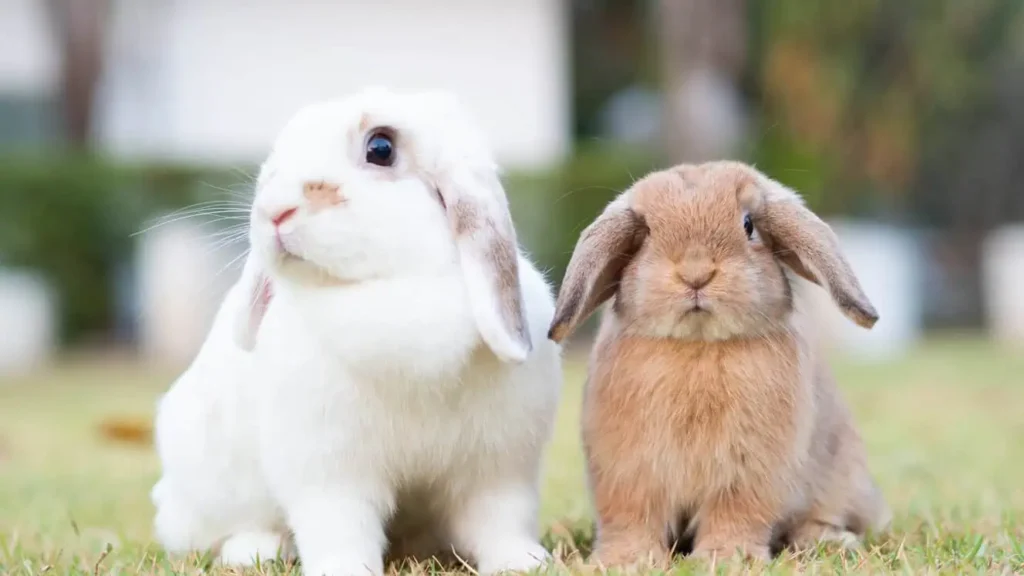
Sam Ryan, Small Animals Behaviour and Training Specialist at Woodgreen, says: “Just like wild rabbits, pet rabbits need a friend – to snuggle on cold nights, groom or get comfort from when they’re scared. Human companionship is not enough. We cannot be with them around the clock or communicate with them as another rabbit can.”
Read on to find out more about:
- What types of rabbits can live together?
- Can two male rabbits live together?
- Does the age of the rabbits matter?
- Where’s the best place to find a friend for my rabbit?
- How to bond rabbits in 5 steps
Sam explains that rabbits living on their own will display behaviours that indicate they’re unhappy and stressed. These may include:
- Hiding away, ‘being lazy,’ and showing little interest in their environment
- Sitting huddled in a corner or in a hide
- Being very still, with their nose twitching fast when they’re handled
- Screaming when they’re handled
- Attacking their owner, grunting, boxing and biting when the owner is in their territory
- Showing destructive behaviour in their accommodation
“Studies have shown that rabbits value companionship as highly as food, and those housed with suitable companions engage in less destructive behaviours such as digging, bar biting, and chewing,” states the Royal Veterinary College Exotics Service.
It’s never too late for your bun to have a new companion
While introducing rabbits can be easier when they’re young, age is not a barrier to forming firm friendships.
Animal wellbeing charity, Blue Cross, says: “If you have a single rabbit, it’s never too late for them to bond with another rabbit. If you have a young rabbit (under 12 weeks old), you’ll usually be able to introduce another young rabbit of the same sex easily. If you have an older rabbit, it takes a little longer. But with a little patience and support, your rabbit will have a companion in no time.”
“There are many cases where older bunnies have spent their twilight years happily with a new companion,” adds Rabbit Welfare UK. “Some rabbits will establish an instant bond. You can recognise this by an initial lack of interest when first introduced, followed by individual grooming. This will soon progress to mutual grooming and the rabbits sitting together. Do keep a careful eye on a ‘love at first sight’ couple for any possible aggression, but if all goes well, don’t separate them – you, and your rabbits, have won the love lottery!”
Introductions must be made carefully
Because rabbits are naturally territorial, have instinctive social behaviours, which can be tricky for us humans to understand, as well as their own unique personality, likes and dislikes, introductions must be made very carefully, or fur will fly!
“Do your homework,” advises the Royal Veterinary College. “Learn as much as you can about rabbit body language and the correct bonding process from reputable sources such as the Rabbit Welfare Fund and Association.”
Even if you’re a lifelong bunny lover, there are a few things you may not know about your hay-chomping chums. Check out our 21 amazing rabbit facts for bunny fanatics >>
What types of rabbits can live together?
“A neutered male and neutered female rabbit can happily live together,” advises Sam Ryan. “Same-sex pairs or siblings can work, but it’s important they’re neutered as early as possible – ideally between three and six months. You should give both rabbits time to fully recover from neutering and be in good health before you start the bonding. A rabbit-friendly vet can tell you how long you should wait after their operations. It will be a few weeks to give the hormones a chance to settle and for the rabbits to fully heal.”
Sam also says that different breeds of rabbit can live together if they bond well, adding, “Take care with a giant and a smaller breed. Many mismatched-size pairings work, but there’s always a risk to the smaller rabbit during the mixing process.”
Never try to match up a rabbit with a guinea pig. Burgess in-house vet Dr Suzanne Moyes says: “Rabbits and guinea pigs have very different social needs, nutrition requirements and temperaments. These two distinct species behave and communicate very differently and are not able to understand each other’s behaviour. Rabbits may bully and injure guinea pigs. In addition, rabbits also carry a bacterium called Bordetella Bronchiseptica, which can lead to severe pneumonia in guinea pigs.”
Can two male rabbits live together?
“Usually, the best rabbit pairings are male and female, but two neutered male or female rabbits can also live harmoniously,” advises Falkirk-based Apex Vets, a rabbit-friendly accredited clinic. “It’s important that neutering is undertaken before the rabbits are matched. This is essential to avoid the rabbits having babies and will reduce the chances of them fighting with each other.”
“Mixed-sex pairs usually work best, although same-sex pairs are not uncommon,” adds Rabbit Welfare UK.
Does the age of the rabbits matter?
“Older rabbits may be less energetic and will prefer a friend of a similar age,” notes Apex Vets. “For a younger rabbit, an equally exuberant mate will help them to feel comfortable with each other.”
Where’s the best place to find a friend for my rabbit?
“The best place to find your second bunny is at a rescue centre,” advises Rabbit Welfare UK. “Not only will you be giving a home to a bunny in need, but a rescue rabbit is likely to be neutered and vaccinated already. Many rescue centres have expertise in pairing up rabbits and will often allow you to bring your own rabbit along to the centre to meet potential partners on neutral ground, where there will be less chance of territorial squabbling. Some rescues have facilities to board rabbits and will supervise the introduction process for you. With a bit of luck, you’ll find a ‘love at first sight’ match for your rabbit, but don’t be disheartened if that doesn’t happen.”
5 STEPS TO SUCCESSFUL BUNNY BONDING
1. START SIDE-BY-SIDE
- Begin by preparing some side-by-side accommodation. This is so the rabbits can get used to the sight, sound and scent of each other through the wire, while still feeling safe in their own space.
- Each rabbit must also be able to hide away from the other whenever they want to, so make sure they both have suitable places to escape to.
2. TRY THE SCENT SWAP TRICK
- It’s normal for there to be some unrest in the beginning, but to help things along, try swapping some of the rabbits’ nesting materials over, or rubbing a soft cloth over one bunny and then the other to transfer scent.
- To help each bun associate the other’s scent with something positive, during the scent swap, provide them both with some tasty treats such as nibbly Forage & Feast Mine Bale Bundles or Forage & Feast Hay Bars.
3. THE INITIAL RABBIT RENDEZVOUS
- Once they seem to be comfortable in each other’s presence, you can try introducing them to each other. It’s essential that they are introduced in a neutral area that neither rabbit has spent time in, so there are no traces of scenting by either bunny. An existing rabbit scent profile would indicate that one has claimed the territory as their own, leading to a fight.
- They will also need careful supervision. Some negative behaviours are normal as they get to know each other, but if they begin growling, chasing and mounting each other, they must be separated immediately to avoid injury.
- “The better the rabbits get on at their first meeting, the quicker they will bond,” says Rabbit Welfare UK. “Make sure you put lots of distractions in with them, so three piles of hay, three piles of herbs, and a tunnel, for example. Make sure there is nowhere that one rabbit can get backed into and trapped. At the slightest sign of tension, separate the rabbits. A little bit of chasing and nipping is normal, but it’s better to separate the rabbits too soon than risk an all-out fight.”
4. DEVELOPING A FRIENDSHIP
- If things are going well, gradually increase the time they’re together each day, while continuing to supervise them.
- Positive behaviours to look for include sitting or lying side by side, even when the barrier is in between them, grooming each other and seeking each other out for friendly interactions.
- You can then begin to introduce toys, tunnels and hiding places – although make sure there are enough for both rabbits, so squabbles don’t break out. Rabbit Welfare UK advises: “You can assist this process by feeding the rabbits together and providing lots of cardboard boxes and hidey holes so that they don’t have to stare at each other. Rabbits are very territorial, and any competition for resources might cause tension, so ensure you have at least two of everything – feeding station, water bowl, hidey hole – one for each rabbit. If you are able to put the rabbits together for very brief periods every day, they’ll get used to each other far more quickly.”
5. HAPPY BUNNIES!
- Once the rabbits are spending one to two hours together daily without any problems, they can be introduced into their intended living space, which should be as big as possible, with constant indoor and outdoor access, a range of platforms, tunnels and hiding places – initially under supervision.
- Once they’re regularly showing positive behaviours towards each other, they can be left alone together safely to enjoy hours of happy bunny time. “When the rabbits are happy to groom each other and lie together, they can be left unsupervised together,” advises Rabbit Welfare UK. “The whole process can take anything from a couple of hours to a couple of months.”
DID YOU KNOW BURGESS PET CARE IS ON A MISSION TO HELP ALL PET RABBITS LIVE HAPPIER, HEALTHIER LIVES?
Rabbit Awareness Week (RAW) is the UK’s largest welfare initiative dedicated to pet rabbits. It’s led by small pet experts Burgess Pet Care in partnership with leading UK animal charities – the RSPCA, Blue Cross, Woodgreen and Raystede Centre for Animal Welfare, who come together each year to support rabbit welfare.
Burgess in-house vet and deputy managing director, Dr Suzanne Moyes, says: “It’s often the case that rabbits are suffering not through neglect but through a lack of understanding among their owners, which is why campaigns like RAW continue to be vitally important, helping the UK’s rabbits to lead happy and healthy lives.”
- REGISTER to get involved in RAW 2026 and to receive your FREE packed filled with loads of bunny fun and information here >>.
- SIGN UP to the Excel Bunny Base – a safe Facebook community for rabbit guardians who are looking for advice and friendly discussions from like-minded owners – and there are lots of cute bunny photos and videos! Also join us on Instagram.
- CARE MORE Discover more about meeting the needs of your rabbits with our Rabbits Care Guide >>.
- JOIN theBurgess Pet Club for exclusive offers, competitions and expert advice from our in-house vet, Dr Suzanne Moyes.
* While it’s lovely for children to enjoy the company of rabbits, the responsibility for any animal’s wellbeing lies with adults. Small animals are often more complex to feed and care for than a cat or dog, and require more looking after than a child can provide. *
SERVE UP ONLY THE VERY BEST DINNER FOR YOUR BELOVED BUNS!
Our small pets deserve a high-quality diet that’s created just for them. At Burgess, all our food for rabbits is made at our factory in the heart of Yorkshire, using only ingredients that meet our stringent specifications.
With a long tradition of supporting British farmers, we actively source all our ingredients as close to our mill as possible and have launched many innovations. These include the world’s first food specifically formulated for indoor rabbits.
Rabbit nuggets – how to choose what’s best for your buns >>
Along with our outstanding feeding hay range, check out our tasty nugget varieties specially created for junior and dwarf rabbits, golden oldies and adult rabbits – there’s even a light recipe for buns who are watching their weight! And don’t forget our delicious range of healthy treats!
*It’s no surprise that 92% of UK vets recommend our Burgess Excel small pets range!*
WITH A WHOLE HOST OF 5-STAR REVIEWS, HERE’S WHAT OUR CUSTOMERS HAVE TOLD US:
* “My bunnies have had less gastric problems since I changed to Burgess. My bunnies love it.” * “Great product, the rabbits love it!” * “Bunnies love these. Great Burgess quality as always.” * “My bunnies absolutely love this food.” * “Best nuggets, my rabbit loves these!! Huge sack lasts me well over a month.” * “My boy’s gut health has been so much better. I couldn’t recommend this food more. He’s definitely much happier, has more energy and isn’t as lethargic.” * “My rabbits love these nuggets, so they clearly taste good. Good value for money and good quality feed.” * “Rabbits love it, so they say. Rabbits’ review 5 stars.” * “Always high quality. Rabbits think it’s tasty, and it keeps them healthy. Would recommend.” *
NEED SOME EXPERT RABBIT FEEDING TIPS?
If you are at all unsure about the best way of feeding your rabbits, or have any concerns about specific nutritional requirements, ask your local veterinary practice for advice. You can also call our expert team on 44 (0)0800 413 969, who’ll be happy to help. They’re available 9am-5pm, Monday to Friday. Alternatively, use our online form to get in touch. Did you know that for small furries such as rabbits, hay should be the BIGGEST part of their daily diet? >>